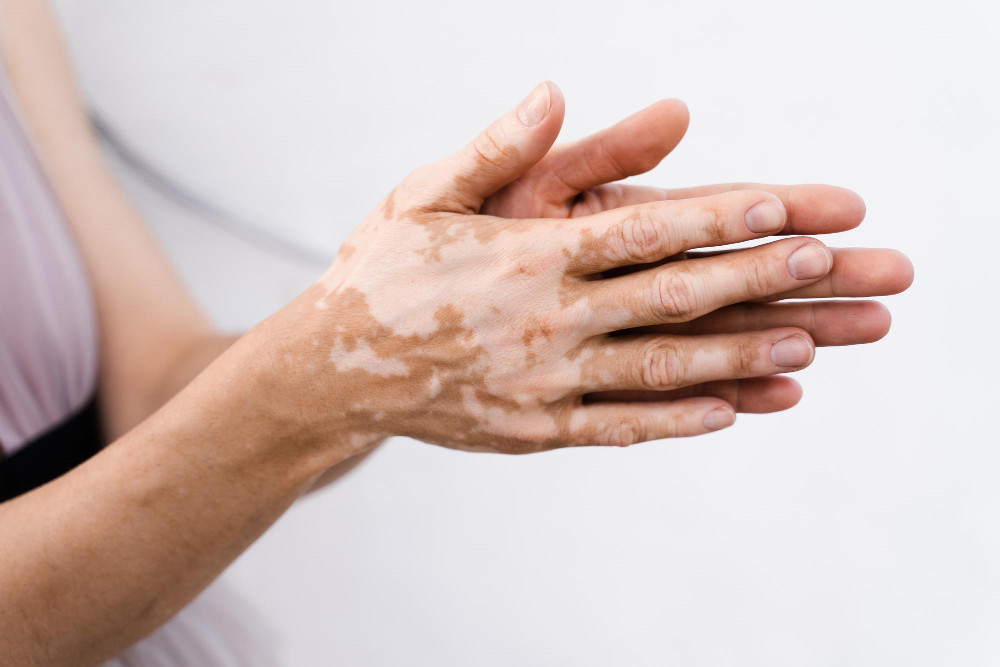
Vitiligo is a chronic skin condition characterized by the loss of pigment in patches of skin, resulting in white spots. It can affect any part of the body and may be triggered by autoimmune responses, genetic factors, or environmental influences.
Treatment options for vitiligo aim to restore skin color or even out skin tone. The approach varies based on the extent and location of the condition, but the goal is always to improve the appearance and self-esteem of those affected.
The doctor examines your skin, understands your vitiligo condition, and checks the extent of white patches, progression rate, and possible triggers such as autoimmune factors or family history.
A customized treatment plan is created using the right combination of medications, topical therapies, light-based treatments, and supportive skincare to promote repigmentation and stabilize the condition.
Regular follow-up helps monitor repigmentation progress, adjust treatment as needed, and maintain long-term control of vitiligo.

We can guide you through vitiligo care, treatment options, and what results to expect from your plan.
Below are a few common questions that patients ask before starting vitiligo treatment.
Vitiligo is a chronic skin condition characterized by the loss of pigment in the skin, resulting in white patches. It can affect any part of the body and is often associated with autoimmune responses.
Vitiligo can have significant psychological and social impacts, and treatment can help improve the appearance of the skin and boost self-esteem. Early treatment may also prevent the condition from progressing.
The exact cause of vitiligo is unknown, but it is believed to be an autoimmune condition where the immune system attacks melanocytes (the cells that produce pigment). Genetic factors and environmental triggers may also play a role.
Yes! Vitiligo can be effectively managed and its progression can often be controlled. However, there is no single one-size-fits-all treatment, as each case varies depending on severity, spread, and individual response. Our vitiligo clinic provides personalized treatment plans tailored to your specific condition and needs.
Nowadays, we have a wide range of vitiligo treatments including medical therapy, phototherapy, and supportive procedures to promote repigmentation. To achieve the best results, it is important to follow the complete treatment protocol as advised by your dermatologist.
In short, our vitiligo clinic protocol consists of: